
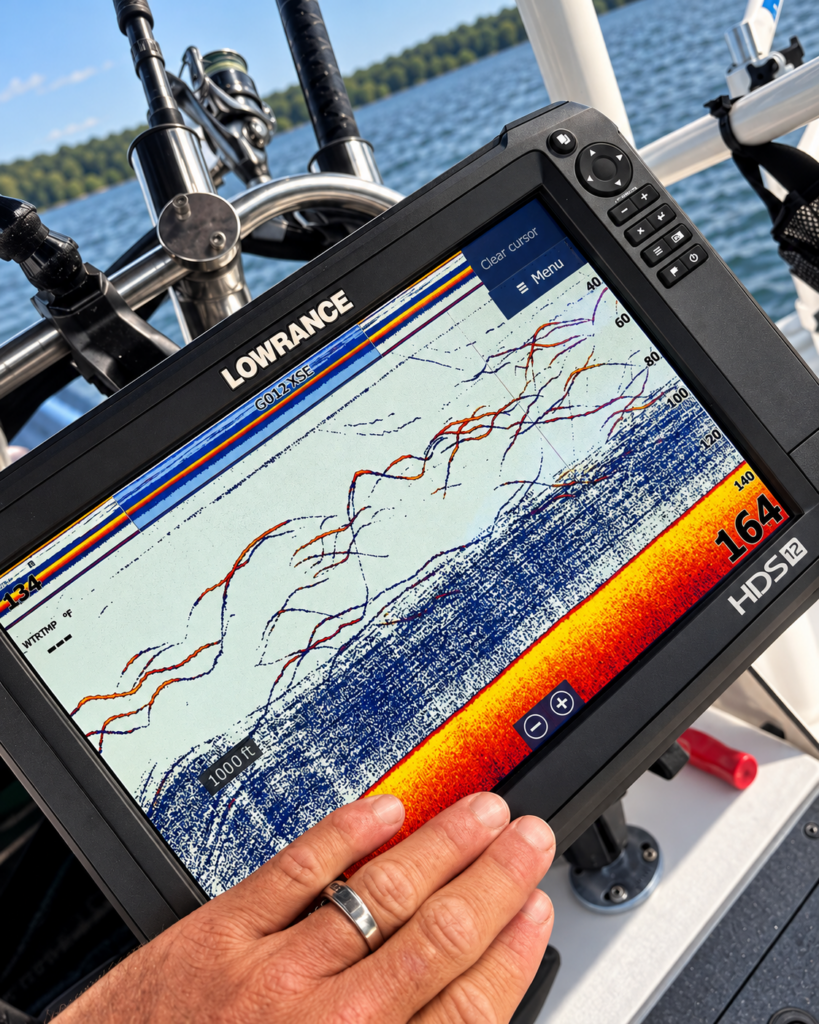
A massive school of striped bass lighting up the sonar on Lake Lanier! 🎣🔥 These fish were actively roaming and feeding throughout the water column, with some of our best action coming between 50 and 80 feet. Finding schools like this is what makes fall striper fishing so exciting!
Photo: Lake Lanier Striper Snipers LLC | Captain Matthew Haynes
October 9, 2026 | Captain Matthew Haynes | Lake Lanier Striper Snipers LLC
After several fishing trips where the striped bass were showing up on the electronics but refusing to cooperate, today’s trip was a welcome change. We had some of our subscribers aboard, and the fish finally decided it was time to eat!
We finished with well over 20 stripers, worked through approximately 10 dozen blueback herring, and experienced everything from deep-water hookups around 80 feet to fish breaking the surface.
The most important part of today’s trip wasn’t necessarily the number of fish we caught. It was how the fish were positioned, how the wind influenced their movements, and how adjusting our presentations kept us consistently catching fish.
Returning to a Productive Fall Pattern
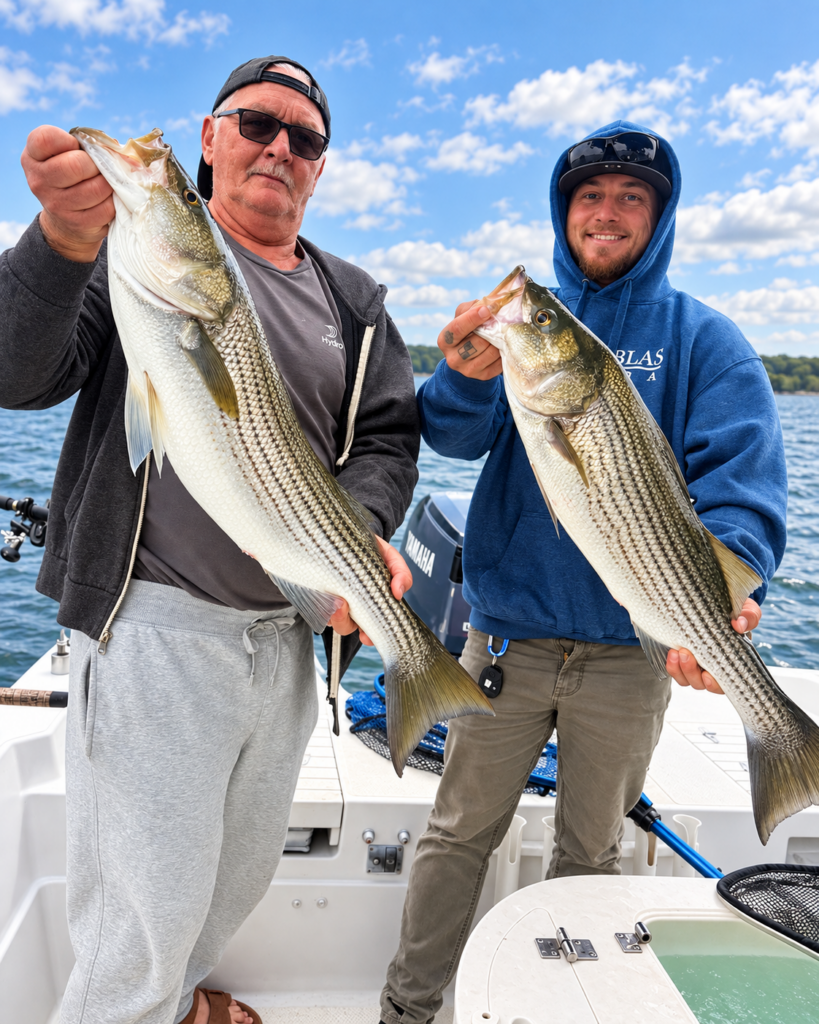
🎣 Two happy anglers and a couple of beautiful Lake Lanier stripers!
Sometimes the best fishing spots are the ones you’ve learned to trust through years of experience. We returned to an area that produced around this same time last fall, and wouldn’t you know it, we landed right on top of a mega school! Within minutes, the rods were bending and the stripers were coming aboard.
A perfect example of why understanding seasonal patterns and keeping track of previous trips can make all the difference! 🔥
Lake Lanier Striper Snipers LLC | Captain Matthew Haynes
One of the biggest advantages of keeping track of seasonal fishing patterns is knowing where fish have historically positioned themselves under similar conditions.
I decided to revisit an area where I had been catching stripers around this same time last year.
After making the run, I shut the boat down and found myself sitting directly on top of a massive school of striped bass!
It doesn’t always work out that perfectly, but when it does, it’s a good reminder of how valuable previous fishing experience can be.
We immediately began dropping live blueback herring and casting spoons. The stripers were aggressive, and we started hooking up almost immediately.
What made this school particularly interesting was how it moved around within a relatively small area.
As the fish disappeared from the sonar, I could move the boat just 10–20 feet and find another group willing to bite. We’d catch three or four fish, move a short distance, and repeat the process.
Instead of making long runs looking for another school, we stayed with the fish that were already in the area.
Using Trolling to Locate More Striped Bass
After catching several fish on live bait and spoons, I decided to experiment with trolling artificial lures, including the Mini Max.
The stripers weren’t particularly interested in the trolling presentation, but the experiment still paid off.
While trolling, I passed over three or four additional schools of fish.
Although the fish weren’t willing to hit the artificials, the electronics revealed that there were considerably more stripers in the area than we had initially located.
I returned to the section holding the highest concentration of fish and began dropping live bait again.
The response was immediate.
We started experiencing hookup after hookup, and the action continued until we eventually exhausted our entire supply of bait.
Sometimes an unsuccessful lure presentation can still provide valuable information about where the fish are holding.
Wind, Cloud Cover, and Moving Baitfish
Today’s conditions played an important role in how the fish were behaving.
We experienced sustained winds around 10–15 mph, overcast skies, and changing weather associated with an approaching tropical system.
Rather than finding all the stripers concentrated on one specific piece of structure, we encountered fish roaming through relatively open water.
The wind appeared to be moving baitfish throughout the area, and the stripers were following those baitfish.
Cloud cover may also have contributed to their willingness to move and feed, particularly compared with some of the tougher trips we’ve experienced recently.
An important observation from today’s trip was that the fish were not necessarily staying in one predictable location.
They were moving with the bait.
Finding Fish Behind a Windblown Hump
Later in the trip, I located a particularly productive concentration of stripers positioned behind a hump.
The wind was pushing across the structure, apparently carrying baitfish over the hump and toward the backside.
I positioned the boat behind the hump, engaged Spot-Lock, and began fishing.
This turned into one of the most productive parts of the trip.
We were able to keep multiple rods working and consistently catch striped bass without repeatedly chasing the schools.
Fishing takeaway: When wind pushes across a hump or other underwater structure, pay attention to where the baitfish are concentrating. The productive location isn’t always the windward side. Sometimes the fish will position behind the structure where bait is being pushed through or over it.
Fish at 40 Feet, But the Bite Was at 50–60 Feet
One of the most valuable lessons from today’s trip involved presentation depth.
Our electronics were showing plenty of stripers around 40 feet, but those fish were largely unwilling to bite.
We could put live herring directly in front of them without getting much of a reaction.
However, when we lowered the baits into the 50–60-foot range, the results changed dramatically.
The deeper presentations consistently produced hookups.
That created another challenge.
At those depths, the blueback herring were only surviving for approximately five minutes before needing to be replaced.
The deeper, warmer-season water conditions on Lake Lanier can be extremely stressful for live bait, particularly where dissolved oxygen is limited.
We compensated by frequently replacing the herring to keep lively bait in front of the stripers.
By the end of the trip, we had used approximately 120 blueback herring!
Fishing takeaway: Don’t assume that marking fish at a certain depth means that is the depth where they are willing to feed. Sometimes moving your presentation just 10–20 feet deeper can make a tremendous difference.
Catching Stripers From 80 Feet to the Surface
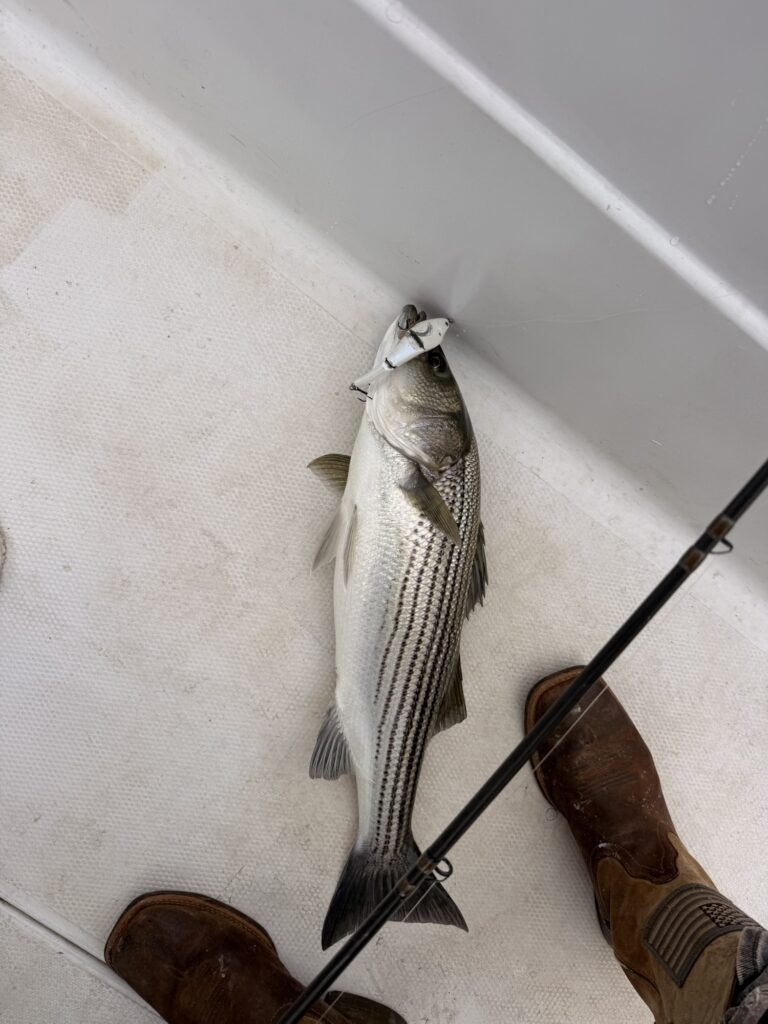
🎣 From 80 Feet Deep to Busting on Top!
After catching stripers as deep as 80 feet earlier in the trip, I went back out to do a little scouting and spotted a few fish breaking the surface. With no live bait left, I grabbed my Sebile, made a cast, and BAM! Another Lake Lanier striper in the boat! 🔥
That’s what makes fall fishing so exciting! One minute they’re holding deep, and the next they’re chasing bait on top. Always pays to keep an artificial tied on and ready!
Lake Lanier Striper Snipers is at it again! 🎯
Another remarkable part of the day was the range of depths where we encountered fish.
During our final productive stop, we caught three or four stripers from approximately 80 feet.
After everyone left, I decided to make a quick scouting run closer to the boat ramp.
I checked the backside of another hump and found a few fish on the electronics. Since we were completely out of live bait, I started working a spoon.
Several fish followed the spoon up and down through the water column, but none committed to biting.
Then I noticed two or three stripers starting to break the surface.
I grabbed a Sebile , made a cast, and managed to hook another fish!
What made that especially interesting was that we had caught stripers at depths approaching 80 feet earlier, yet now fish were actively breaking the surface.
That type of variation is one reason fall fishing on Lake Lanier can be so exciting.
Stripers can be found throughout a wide range of the water column as baitfish move and seasonal conditions change.
What This Means for Lake Lanier Striper Fishing
Based on today’s observations, there are several things worth watching as we continue moving through October:
- Historical fall locations are worth revisiting. Areas that produced during the same seasonal period last year may be productive again.
- Follow the bait instead of focusing exclusively on structure. Fish may roam through open water when baitfish are scattered.
- Pay attention to wind direction. Windblown humps and their backside edges can create productive feeding opportunities.
- Experiment with different depths. Fish marked at 40 feet may respond better to bait presented at 50–60 feet or deeper.
- Keep artificial lures ready. Even when fish prefer live bait, spoons can produce additional hookups, and trolling can help locate schools.
- Watch for surface activity. The appearance of breaking fish suggests opportunities for shallow presentations as fall conditions develop.
One successful trip doesn’t guarantee that every school throughout Lake Lanier will behave the same way. However, today’s fishing provided some encouraging signs as we transition further into the fall season.
Today’s Lake Lanier Fishing Report at a Glance
Date: October 9, 2026
Target Species: Striped Bass
Weather: Cloudy, approaching storm system
Wind: Approximately 10–15 mph
Primary Bait: Live blueback herring
Other Presentations: Casting spoons, Mini Max trolling, Sabiki rig
Productive Depths: Approximately 50–60 feet, with additional fish caught near 80 feet and at the surface
Key Locations: Open water, roaming baitfish schools, and the backside of a windblown hump
Total Catch: Well over 20 stripers
Live Bait Used: Approximately 10 dozen blueback herring
Experience Lake Lanier Striper Fishing With a Local Guide
Days like today are exactly why I enjoy guiding on Lake Lanier.
Sometimes the fish make you work for every bite. Other days, everything comes together, and the rods seem like they never stop bending.
Understanding seasonal patterns, reading electronics, adjusting presentations, and paying attention to changing conditions can make the difference between simply marking fish and actually catching them.
At Lake Lanier Striper Snipers LLC, my goal is to put clients on fish while helping them better understand what’s happening beneath the surface.
Whether you’re an experienced angler or have never caught a striped bass before, I’d love to have you aboard.
Captain Matthew Haynes
Lake Lanier Striper Snipers LLC
Book your Lake Lanier guided striper fishing trip at https://lakelanierstripersnipers.com
Until next time, keep those lines tight and those rods bowed!